What Is Bipolar Disorder?
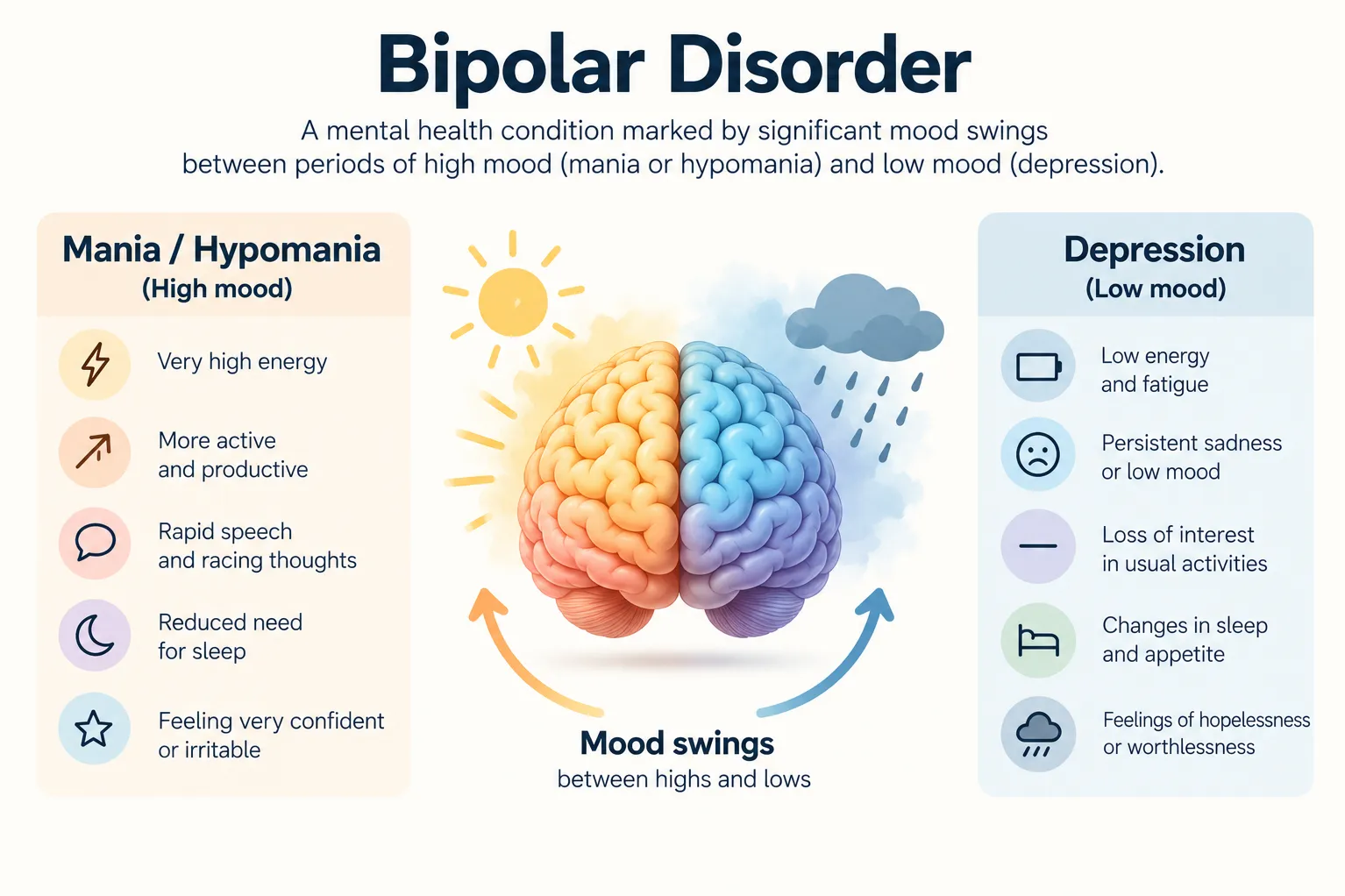
Bipolar disorder is a mental health condition marked by extreme shifts in mood, energy, and activity, swinging between emotional highs (mania or hypomania) and lows (depression).
Example: Someone with bipolar disorder may go through a period of very little sleep, racing thoughts, and unusually high energy or impulsive spending, followed weeks later by deep sadness, exhaustion, and loss of interest in everything.
Common Signs
High phase: reduced need for sleep, racing thoughts, talking fast, risky or impulsive behaviour
Low phase: persistent sadness, fatigue, hopelessness, withdrawal
Treatment Options
Bipolar disorder is a long-term condition, but it is very treatable. Care usually combines several approaches:
Psychiatric evaluation — an accurate diagnosis matters, since bipolar depression can look like regular depression, and the wrong treatment can make symptoms worse
Medication management — mood stabilisers are often the foundation of treatment, sometimes with other medicines depending on symptoms. Doses are reviewed regularly by your psychiatrist
Psychotherapy (including CBT) — helps you understand your condition, manage stress, and spot early warning signs of a mood episode
Psychoeducation — for patients and families, so everyone knows what to watch for and how to respond
Lifestyle support — regular sleep, steady daily routines, and avoiding alcohol help keep moods stable
Ongoing follow-up — regular check-ins to adjust treatment as your needs change
Outlook and Prognosis
Bipolar disorder is usually a lifelong condition, but with the right treatment, most people live full, productive lives — working, studying, and maintaining relationships.
Mood episodes become less frequent and less severe with consistent treatment
Staying on medication and attending follow-ups greatly lowers the risk of relapse
Early diagnosis and treatment lead to better long-term outcomes
Stopping medication suddenly is a common cause of relapse, so changes should always be guided by your psychiatrist
Get Support at Swasthya, Nashik
Swasthya Mental Health Clinic is a mental health clinic in Nashik offering psychiatric care from experienced professionals. If mood swings are affecting your daily life, a consultation with a psychiatrist in Nashik is a good first step.
📞 Call us to book a consultation 📍 Visit us in Nashik
Keywords